“Thin Lines”, final image, 1 of 3
“What’s the most important thing on your mind right now?”
That’s what we were asked to consider when thinking of our final university project. We had free rein to do what we wanted and in spite of my major in Creative Advertising, commercialism and brands weren’t on my mind.
What was on my mind was that normal life was no longer the norm, and seemingly overnight the world had lock-stepped into shutting down and the boy I had fallen in love with was stuck on the other side of it.
Would the world ever be the same again? Would international borders ever reopen? If I keep working this part-time retail job, will I bring a home a virus that kills my parents?
Dramatic, occasionally selfish questions in hindsight, but they were honest anxieties as I was living through them.
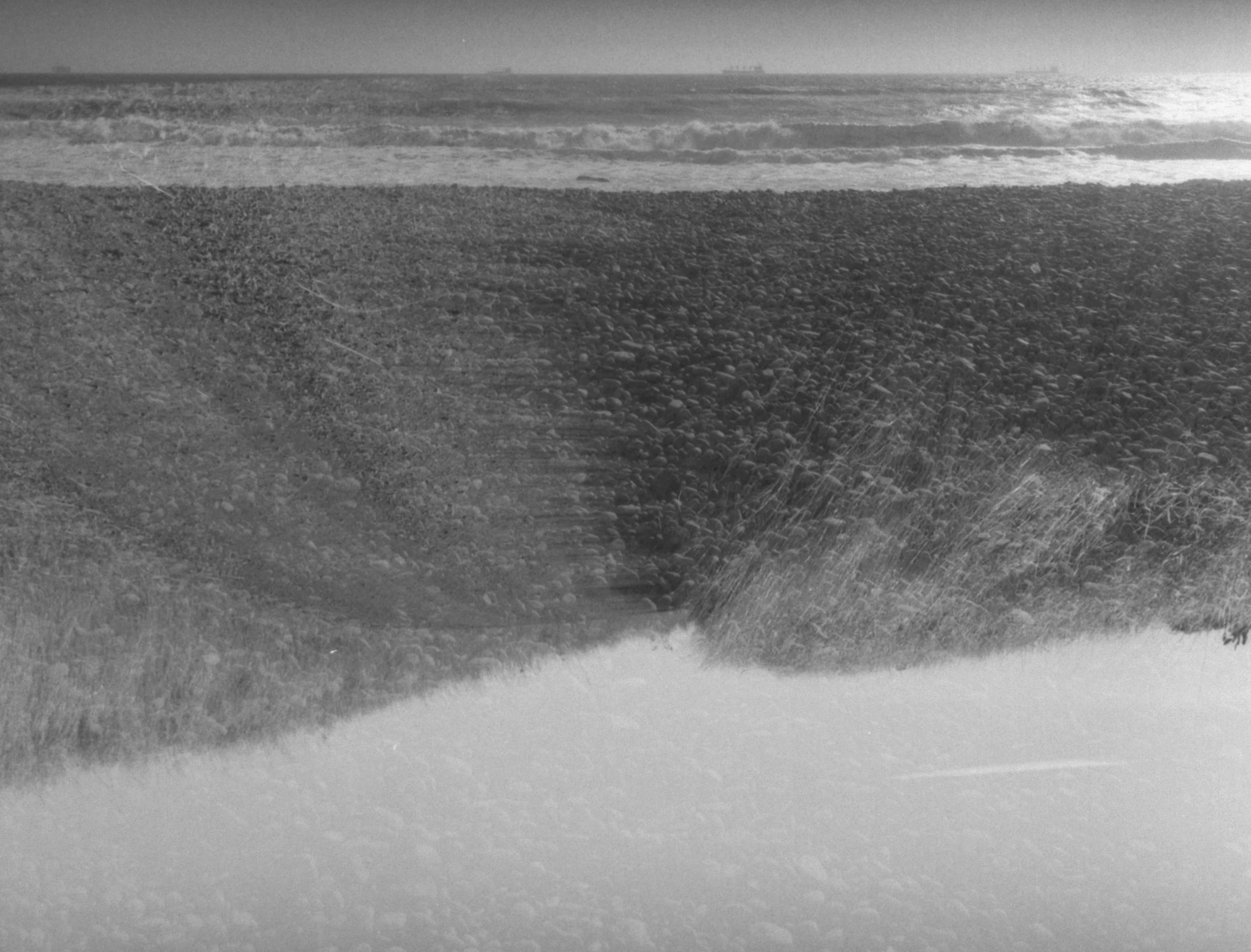
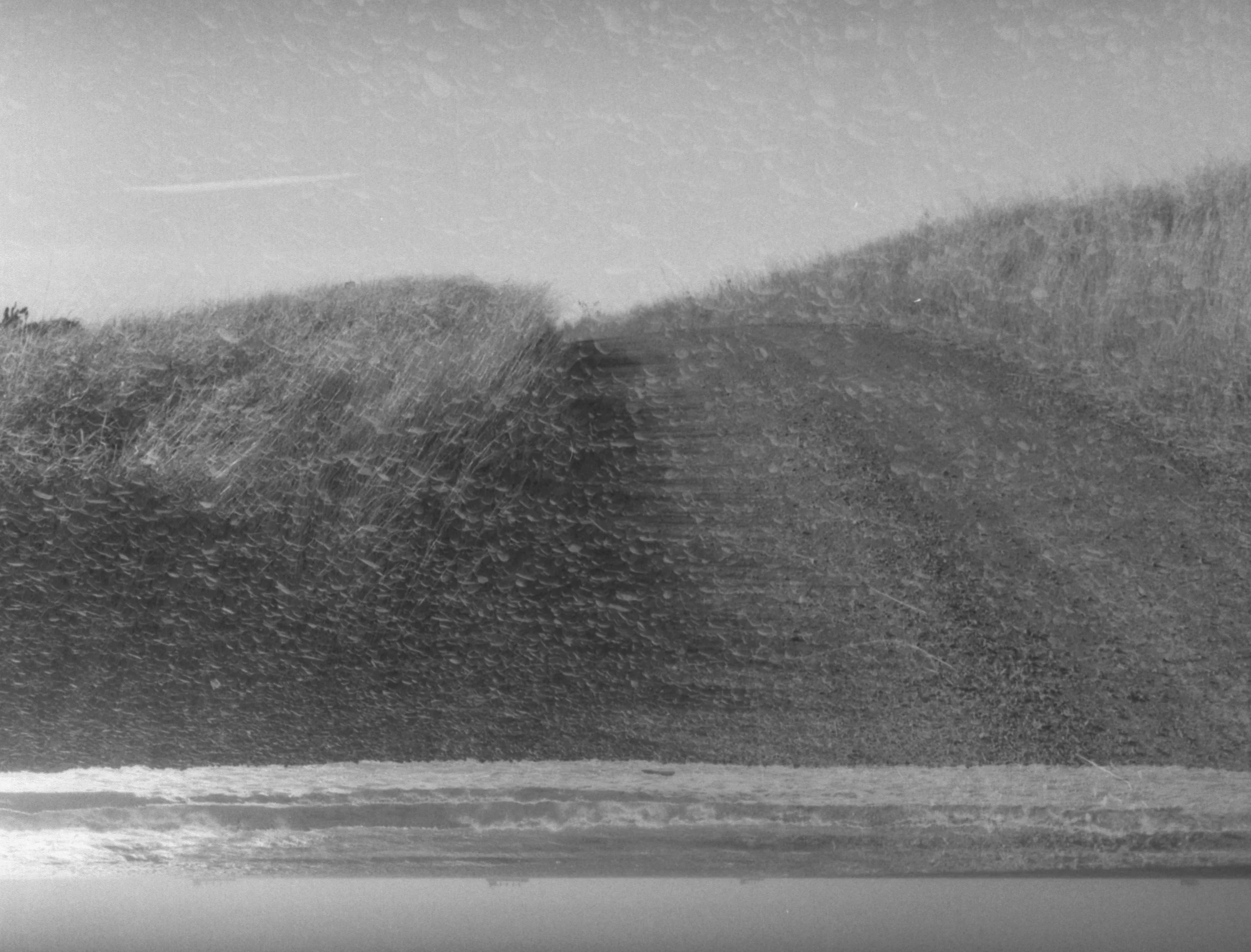
Scan of a final negative 2 of 4, displayed from each camera's perspective.
Bruno, who was still living in Chile, was supposed to return in 8 months to start university. The plan was to move in together.
He wouldn’t return for another 21 months, landing on the final day of December 2021.
My favorite image is the one above, which I’ve included early on here and presented both ways.
It’s beautiful, but it’s taken a long time to desensitise ourselves from its mental baggage. It hangs in our bedroom now.
Explaining the above image —
using exact same piece of tape on both lenses, on the left we have the 50mm lens, shooting from wide open until f/11.
On the right, the 24mm lens, which begins a little darker at f/2, shot until f/11.
As you can see, they were both equal at about f/8, but the before then the tape seemed to have little effect on the 50mm lens.
Some apertures would produce hard lines, while others would allow us to blend our images more easily.
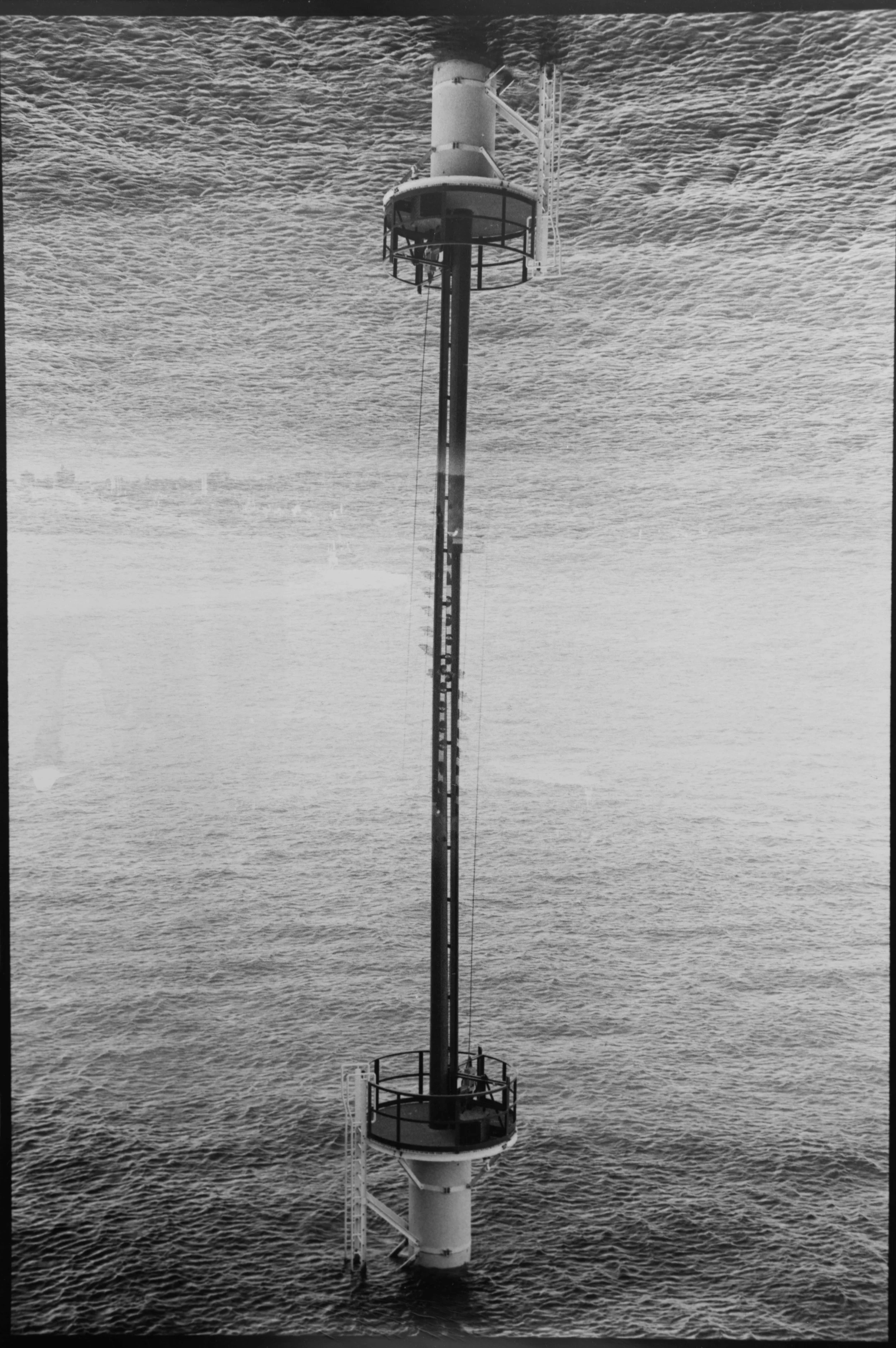
Shot from the Sydney Opera House
So before I keep going, I do have to mention the origins of this idea, and the specific technique in use, this wonky ocean pole, and why it’s a little crazy that this idea even worked.
This secret spot was shown to me by photographer Josh Delgado during Bec and Alex’s wedding years and years before the project, and it’s become quite special to me.
It’s 1.5 hours away from home by car. I’ve taken my dad up here for a picnic on father’s day, and visitors when they come in from overseas. Nearly had my little sedan get trapped when the wheels rolled backwards into a ditch, until I remembered I drive a forward-wheel drive.
It’s just a public access road up a hill, surrounding by working farms, but the view is incredibly calming at any time of the year.
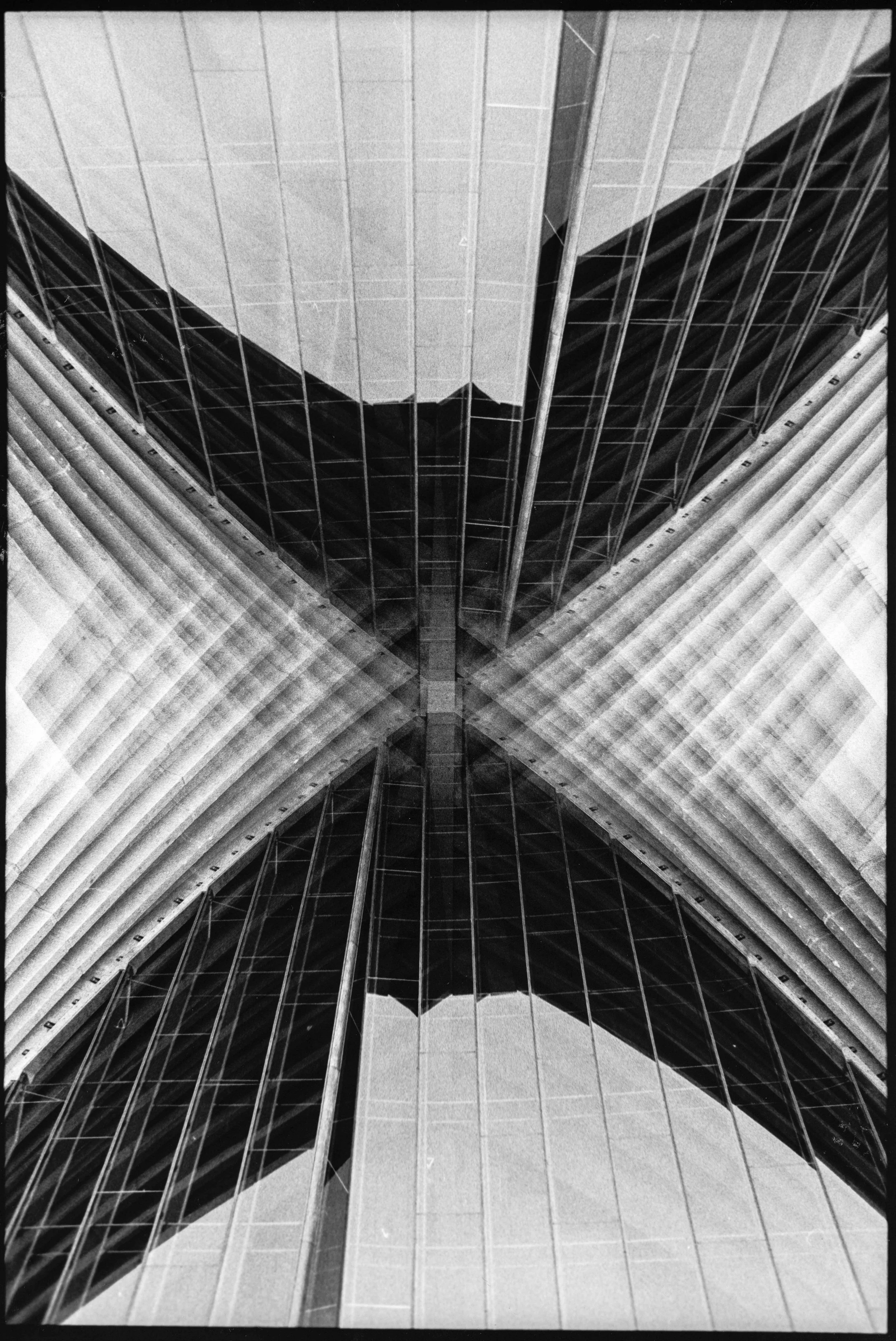
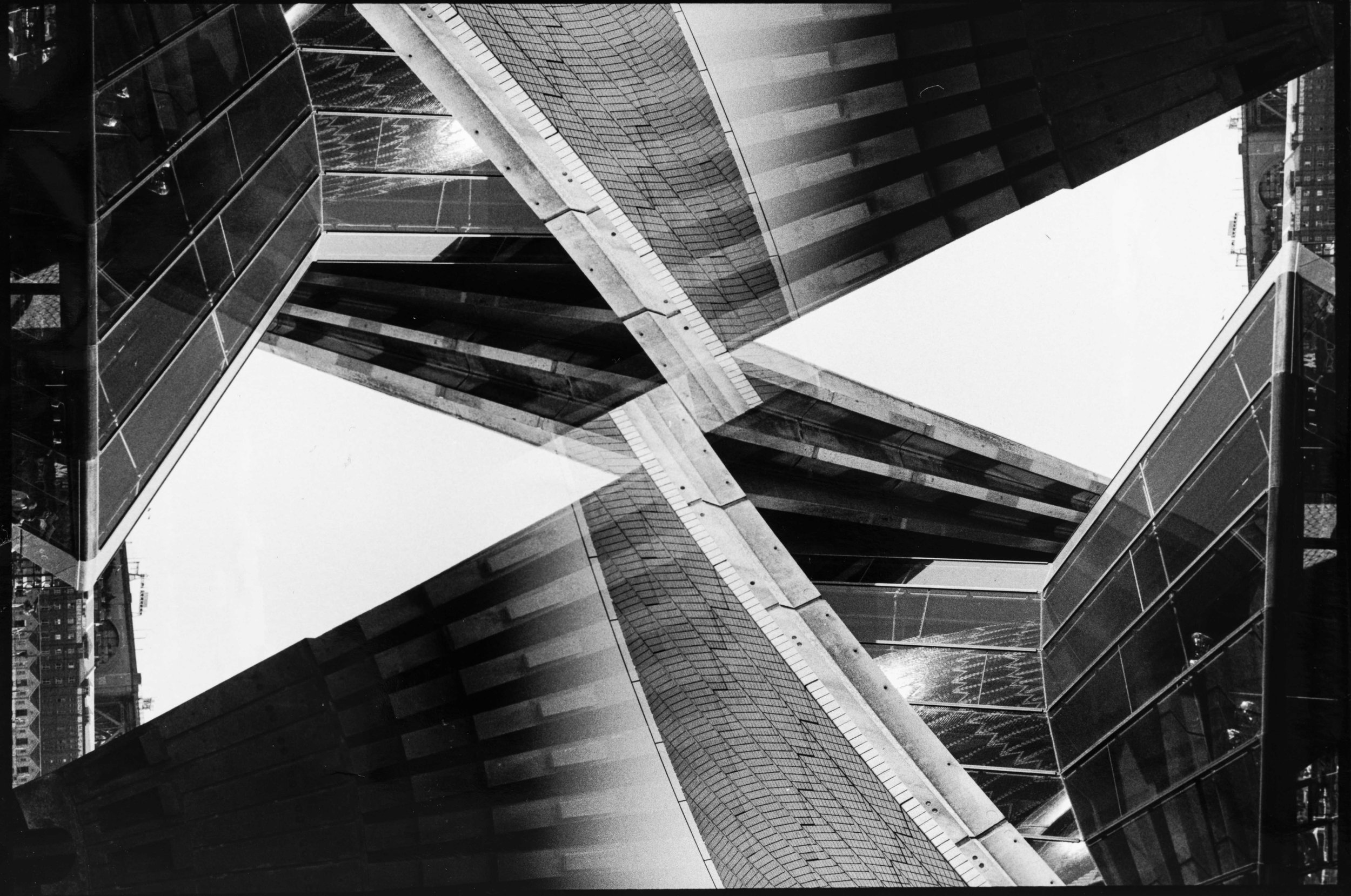
Sydney Opera House
These images were created all the way back when I took an elective class in Sydney while finishing my degree in Music Composition.
Little did I know that I would incorporate this technique again four years later, spanning two continents, in a completely different degree.
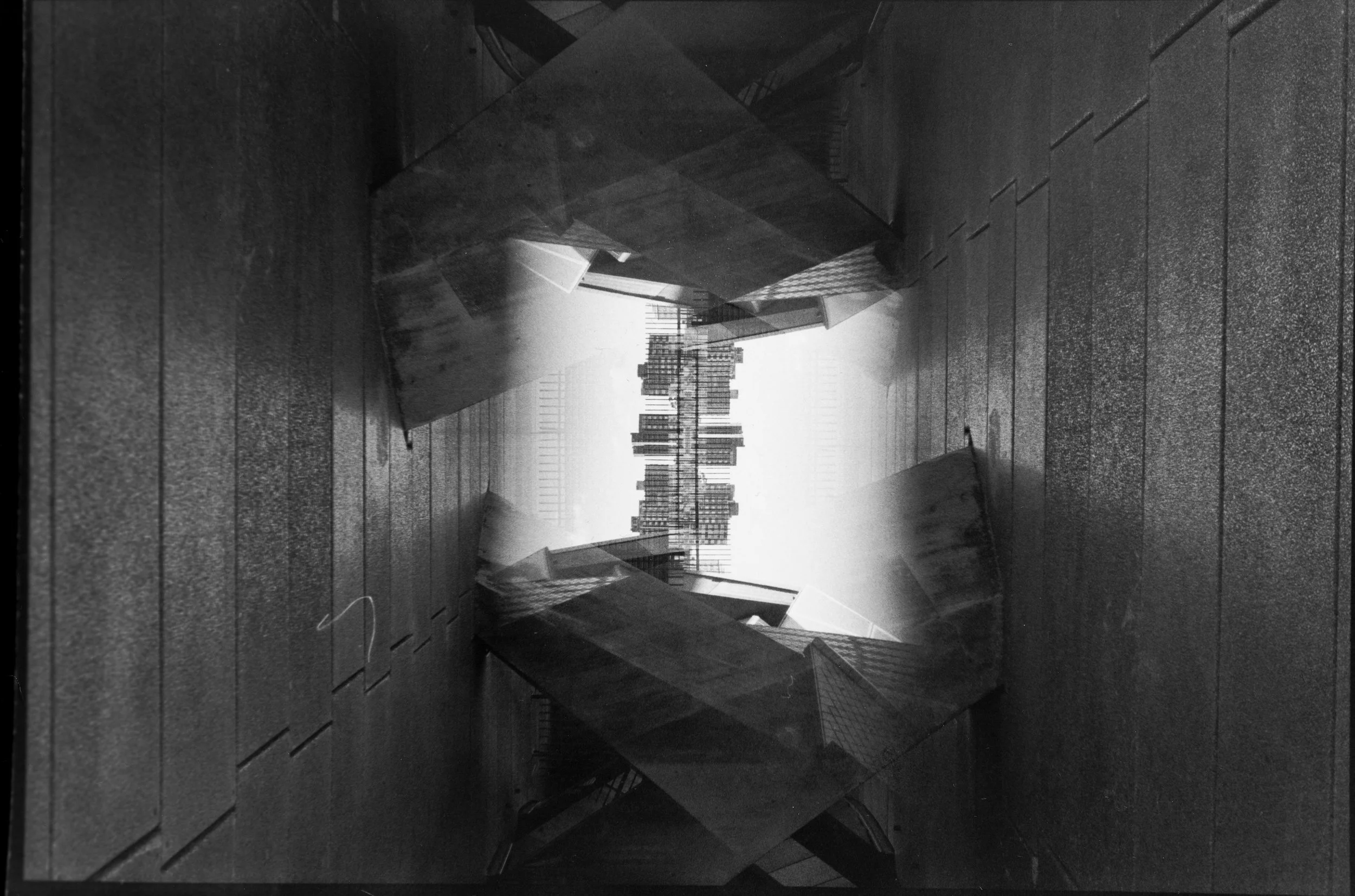
Sydney Opera House
You cover half the lens with electrical tape (I put it on a lens protector to easily rotate it), take the first exposure, then flip the camera upside down and cover the other half of the lens and take the second exposure. The film should not advance, as you want the two exposure to fit into one 35mm size.
(Moschetti’s idea used a plastic lens cap with the middle cut out, but breaking plastic seemed harder than cutting a piece of tape.)
Sydney Opera House
The double exposure (which itself is an incredibly old) technique I’m using here is something I did not invent — I found it 4 years prior to the project on the website PetaPixel from photographer Vincent Moschetti.
I am almost certain I’m the only person that has done it to this scale, however.
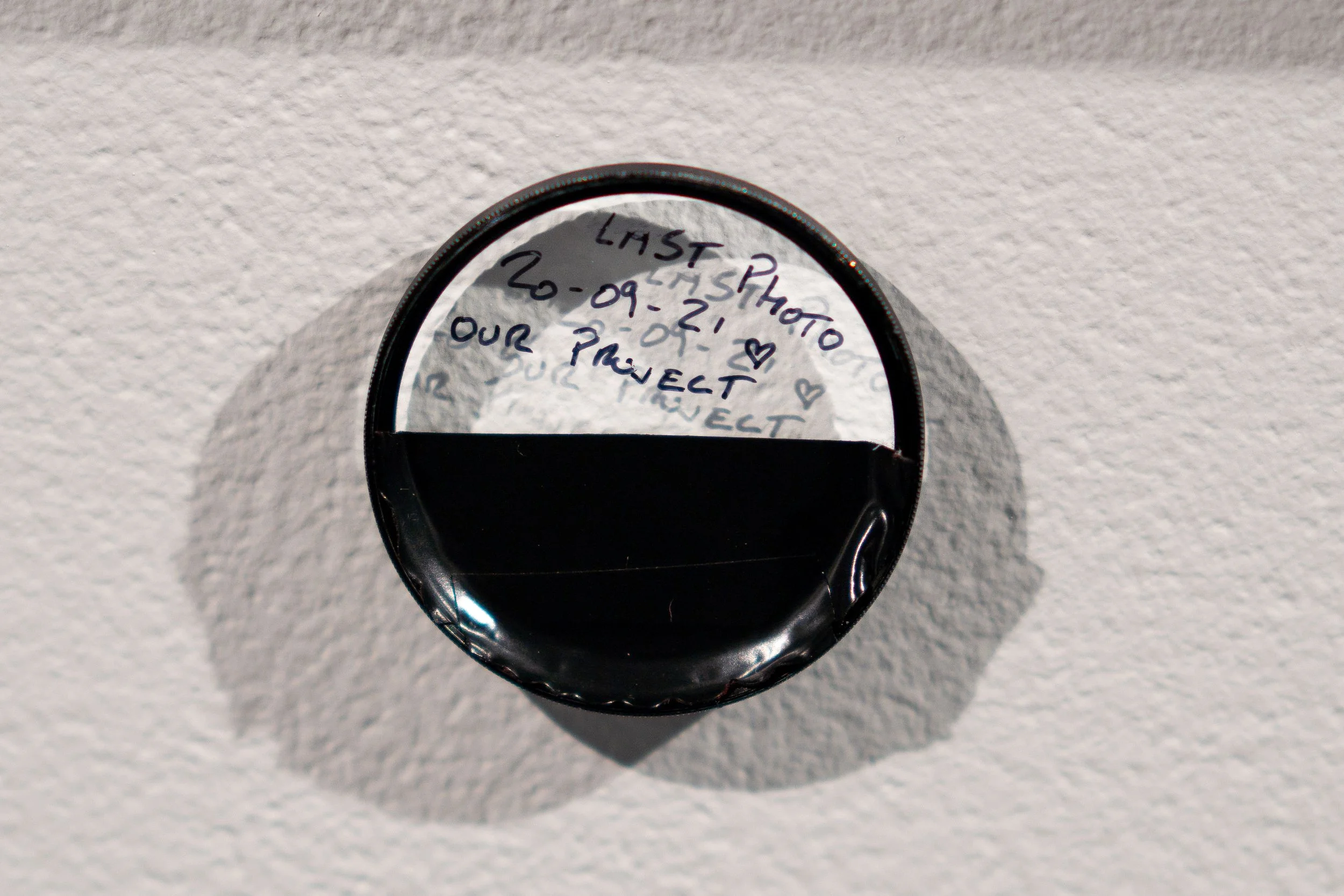
Bruno signed his lens protector before sending it back with the final shipment of film rolls.
This becomes the same image converging onto itself in the middle, with the beautiful peculiarities of film seamlessly blending them together — most of the time. It’s a technique with a high degree of failure.
So why the wonky pole?
Because I was doing this handheld and it’s awkward to hold a chunky film camera that is upside down.
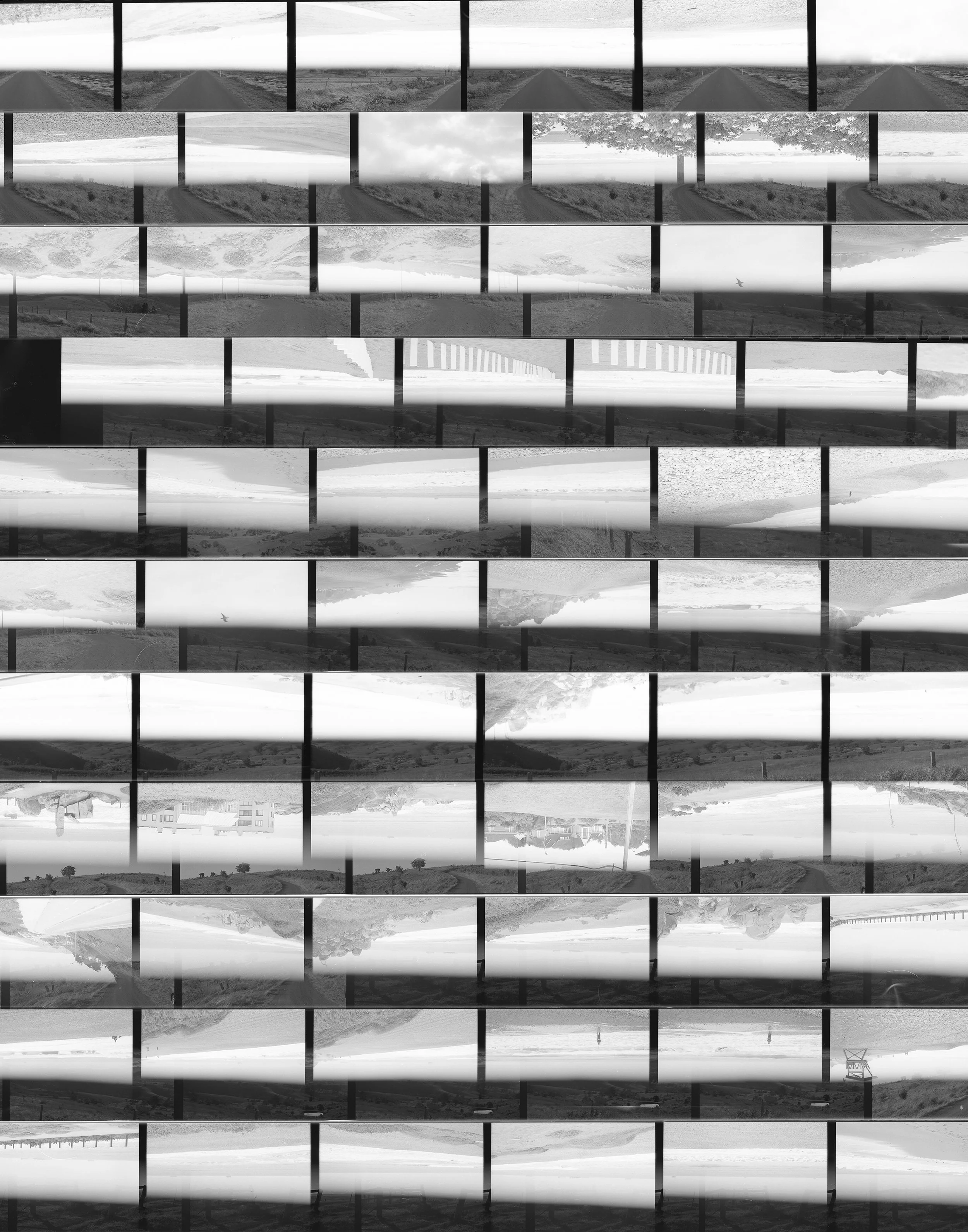
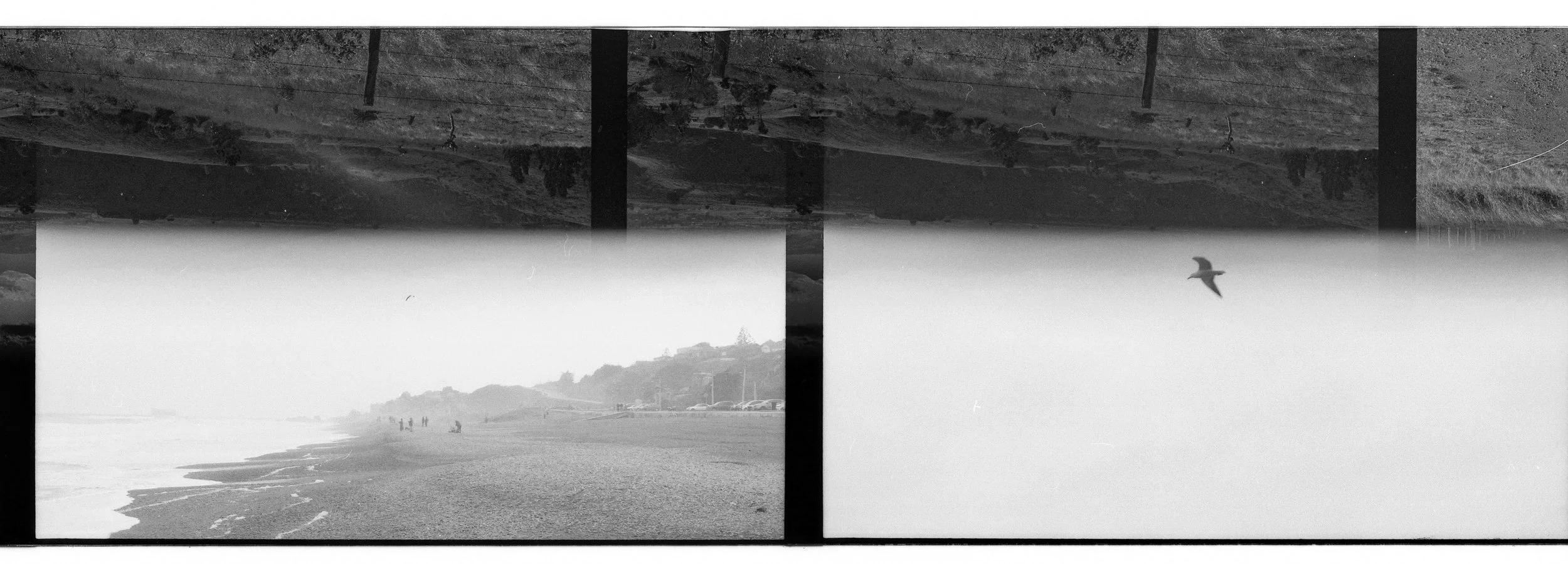
Developed roll of 36 exposures
Alignment issues, both on horizontal and vertical axis, were not uncommon.
And this was Bruno’s first time with an analogue camera, and the light meter built into the camera was basic, so mistakes like over-exposing an entire roll were not uncommon.
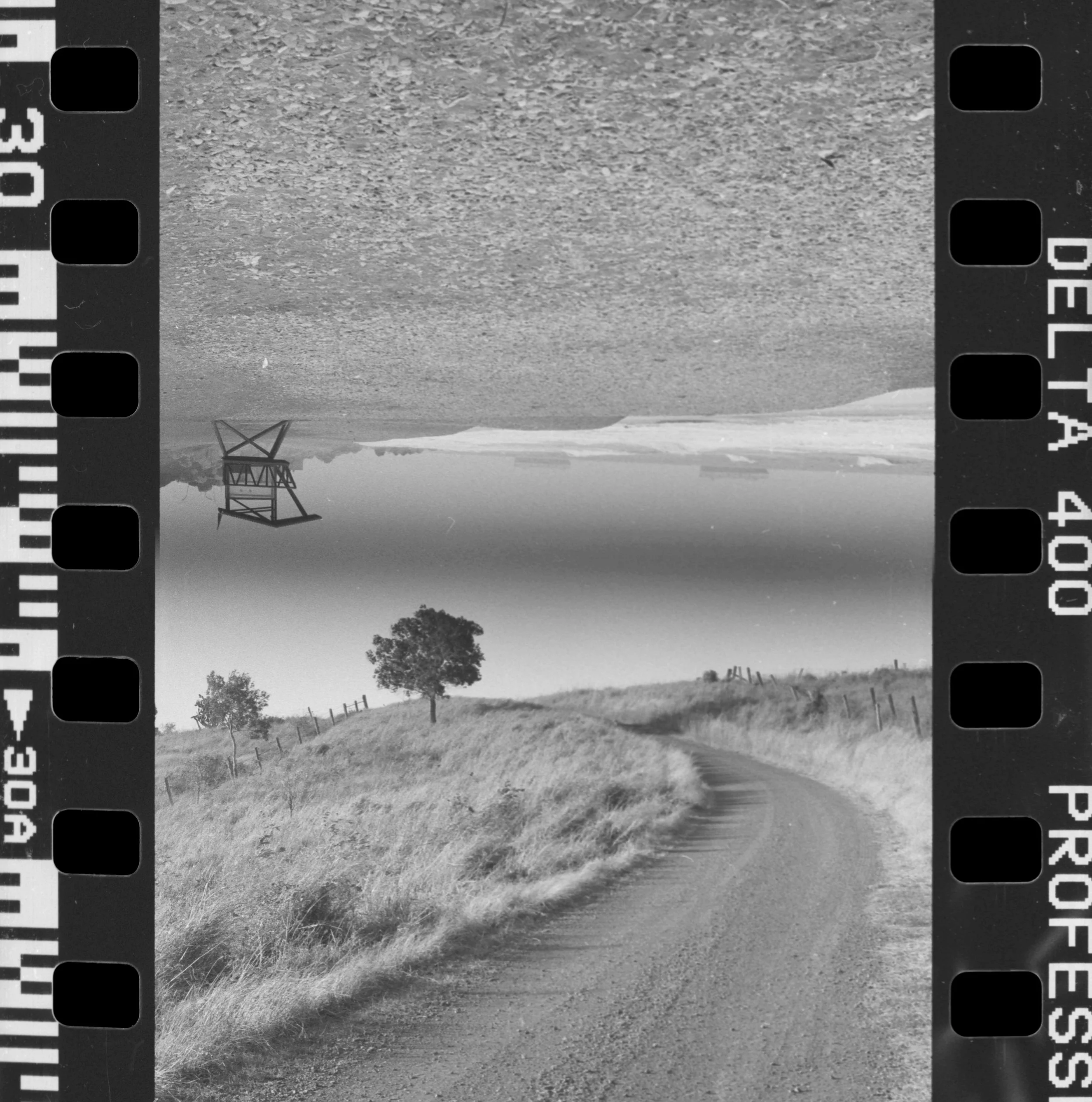
And yet, there in the upper right hand corner:
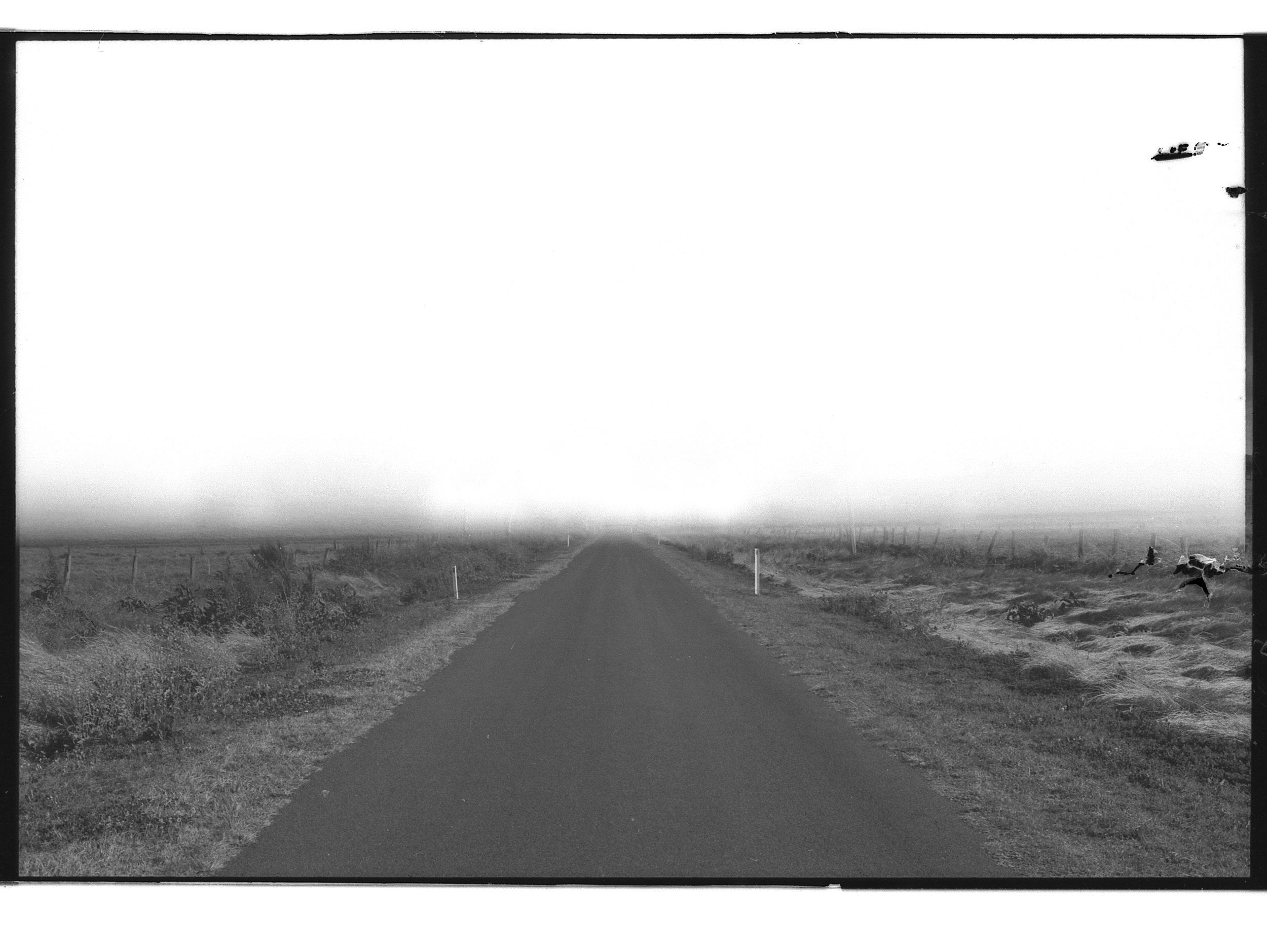
Scan of a final negative presented to the university, 3 of 4.
I’d learn to embrace the ‘mistakes’, too.
The damage you see on the image is from a drying hook.
Normally you try to hang film from the unexposed ends but I was so sure this roll was a dud that I simply didn’t bother trying to preserve the negatives.
I think it adds character to the image now.
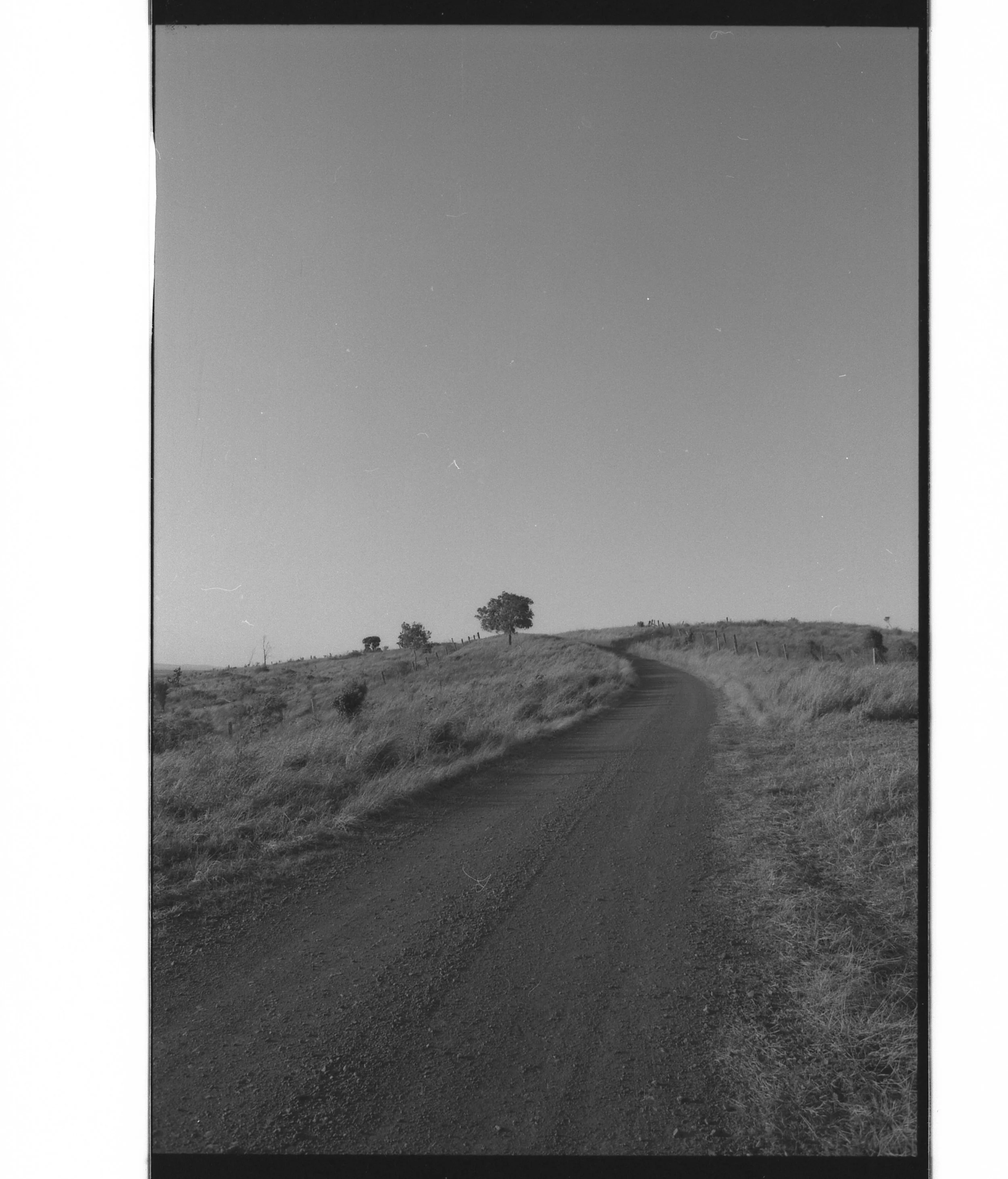

Boonah hilltop, 24mm. Other technical details unknown/lost
Familiar sight?
You may have seen it on Bec and Alex’s wedding page.
I kept coming back to this spot, and this area. It represented what I felt was my little corner of home, because its location was secret to almost everyone I knew.
Scan of a final negative presented to Griffith, 1 of 4. All presented images would be developed and printed in the darkroom for a final presentation. The rest live on as negatives.
Scan of a final negative presented to Griffith, 1 of 4.
Bruno in contrast lives right by the ocean, so most of his images are exactly of that, and of the beaches in his area. Some will have been during a road trip to a nature reserve with a waterfall too.
I would travel to the ocean too, not yet knowing if the pictures I had taken in my secluded spot would work at all. Trying to heighten the chance of success, I thought our images might benefit from sharing a common theme.
Below you can see a lifeguard’s hut gently resting above our hilltop, and based on the field of view, we were both using our 50mm lenses.
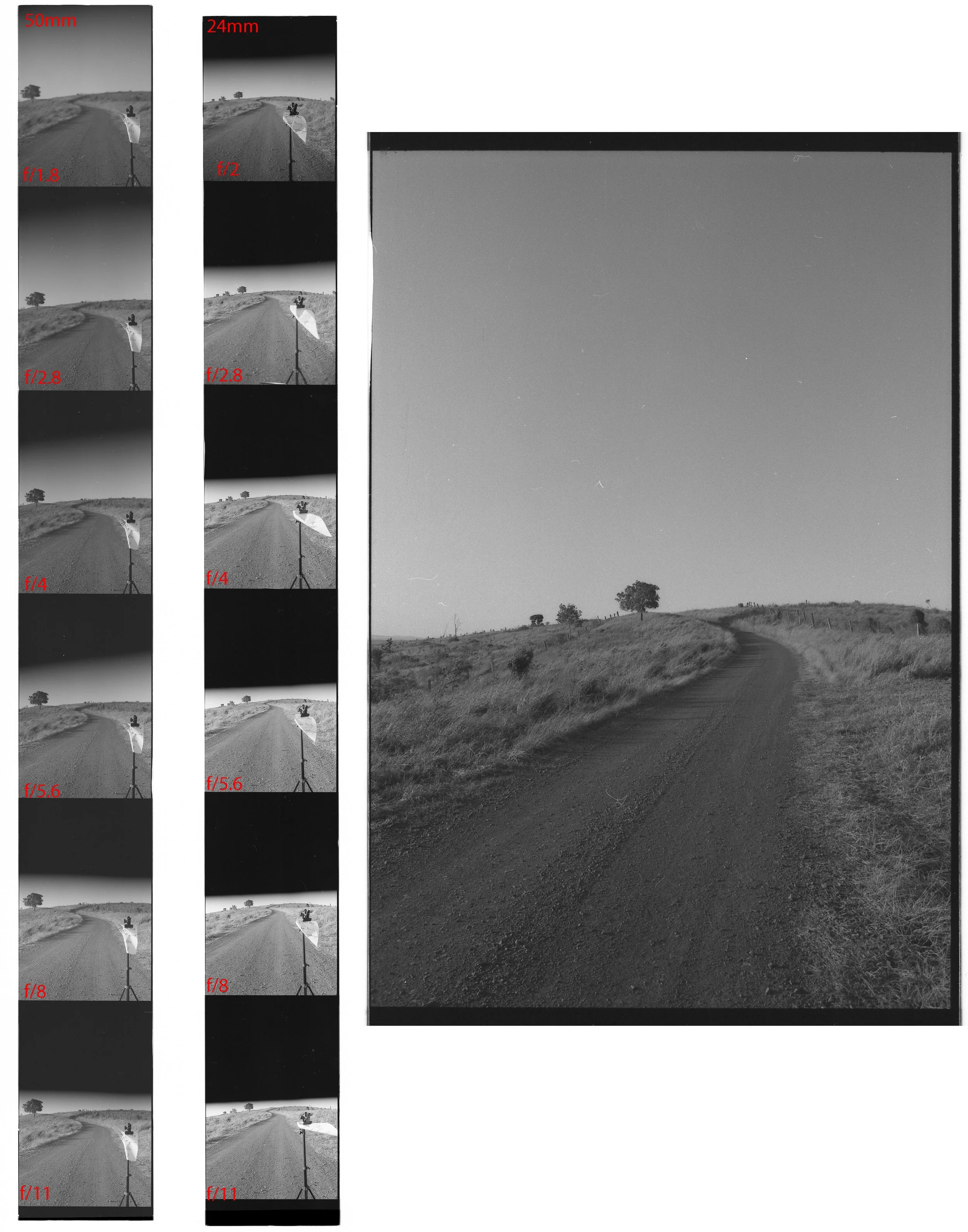
But even before all of that, of the arranging of cameras and lenses in a different country, I had to conduct initial, time consuming tests.
In the past I would shoot and pray, but we didn’t have the luxury of time.
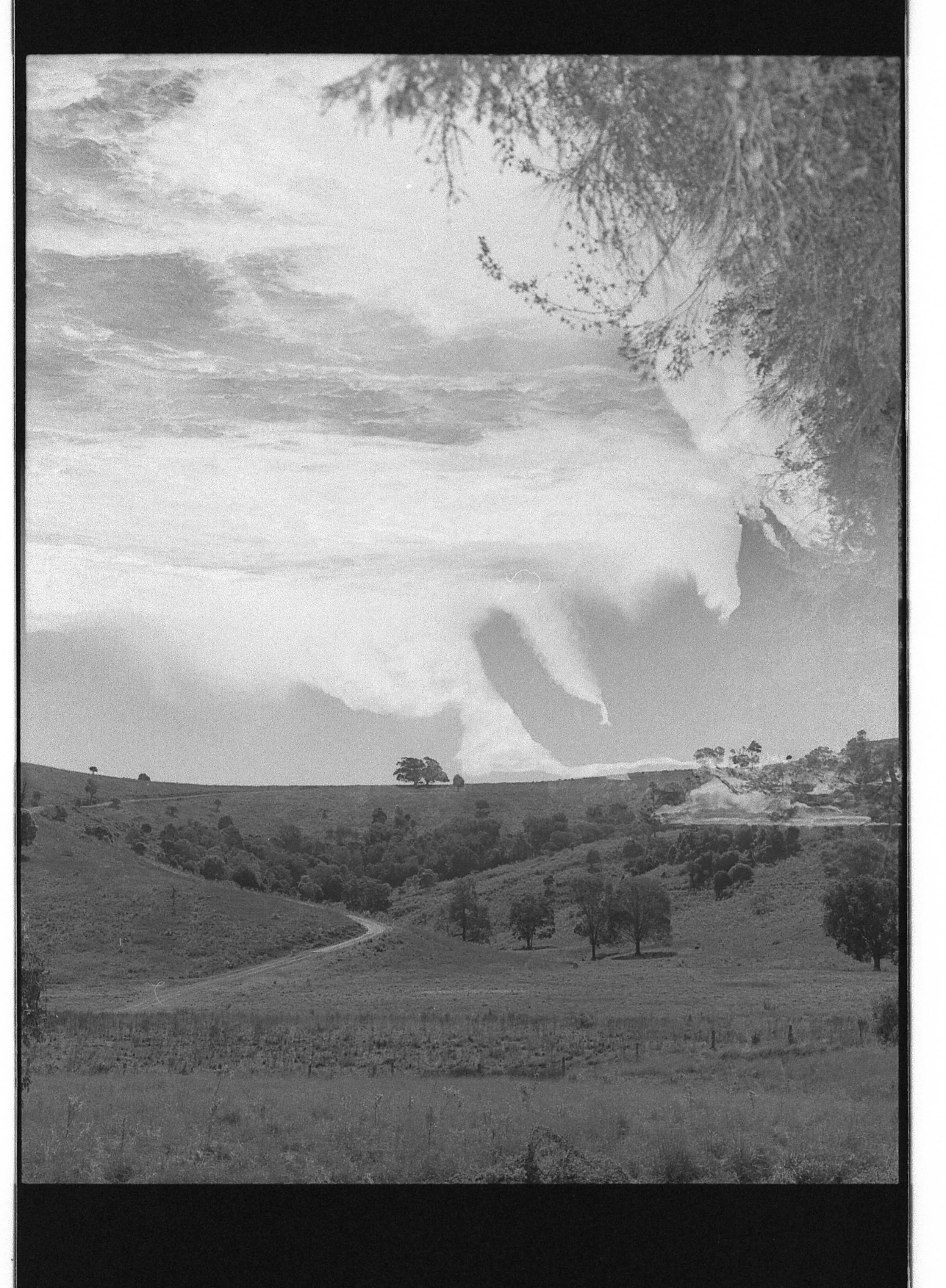
Scanned film negative, not presented to the university
In the end, everything turned out exactly at it needed to.
There are dozens of things that could have gone wrong on this project (and some did, and it turned out great). The radiation alone from customs scanners should have been enough to fry our film.
But this art project became a project in logistics, and it had its intended effect — keeping our minds occupied while we were separated.
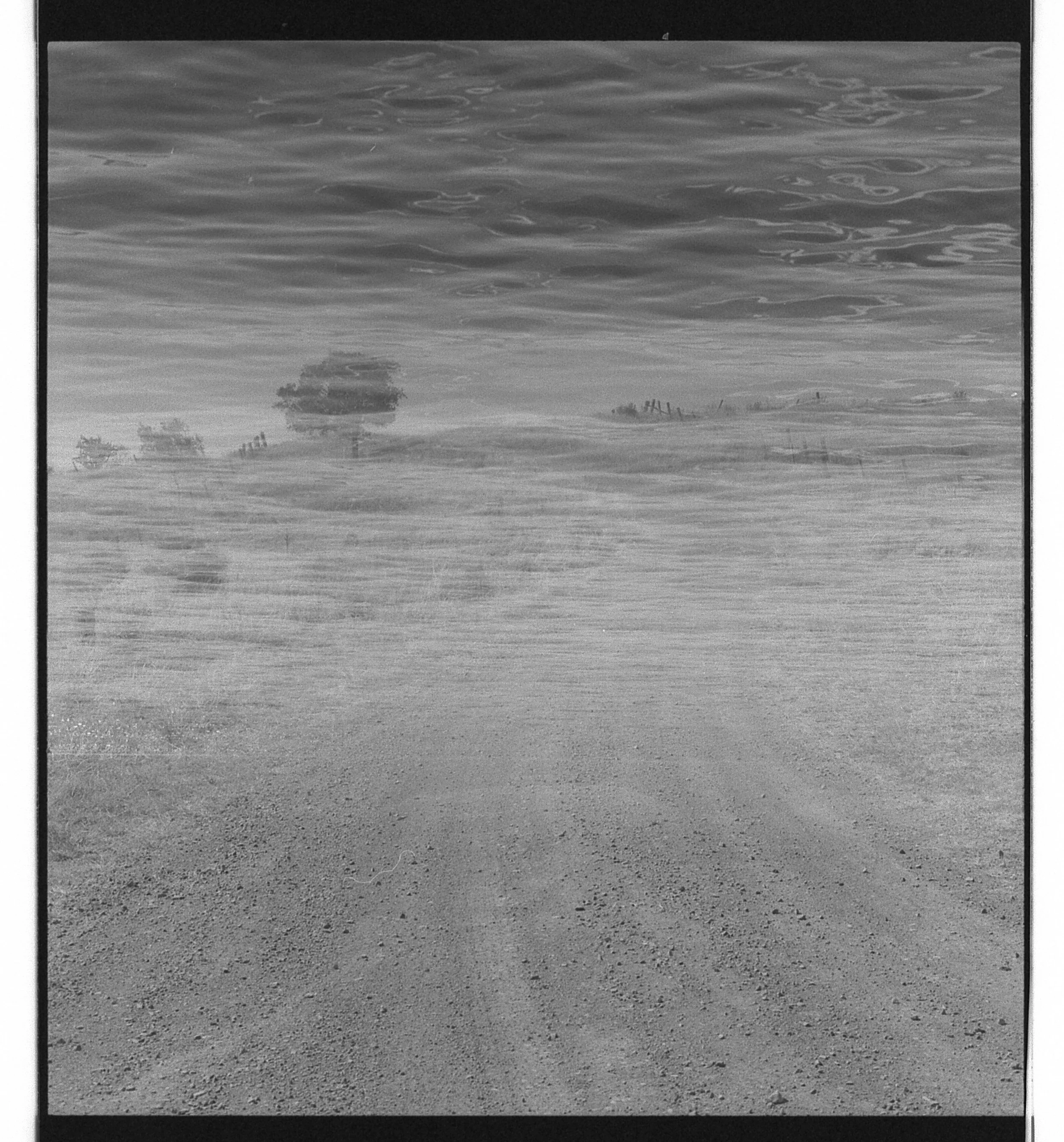
Scanned film negative, not presented to the university
Scanned film negative, not presented to the university
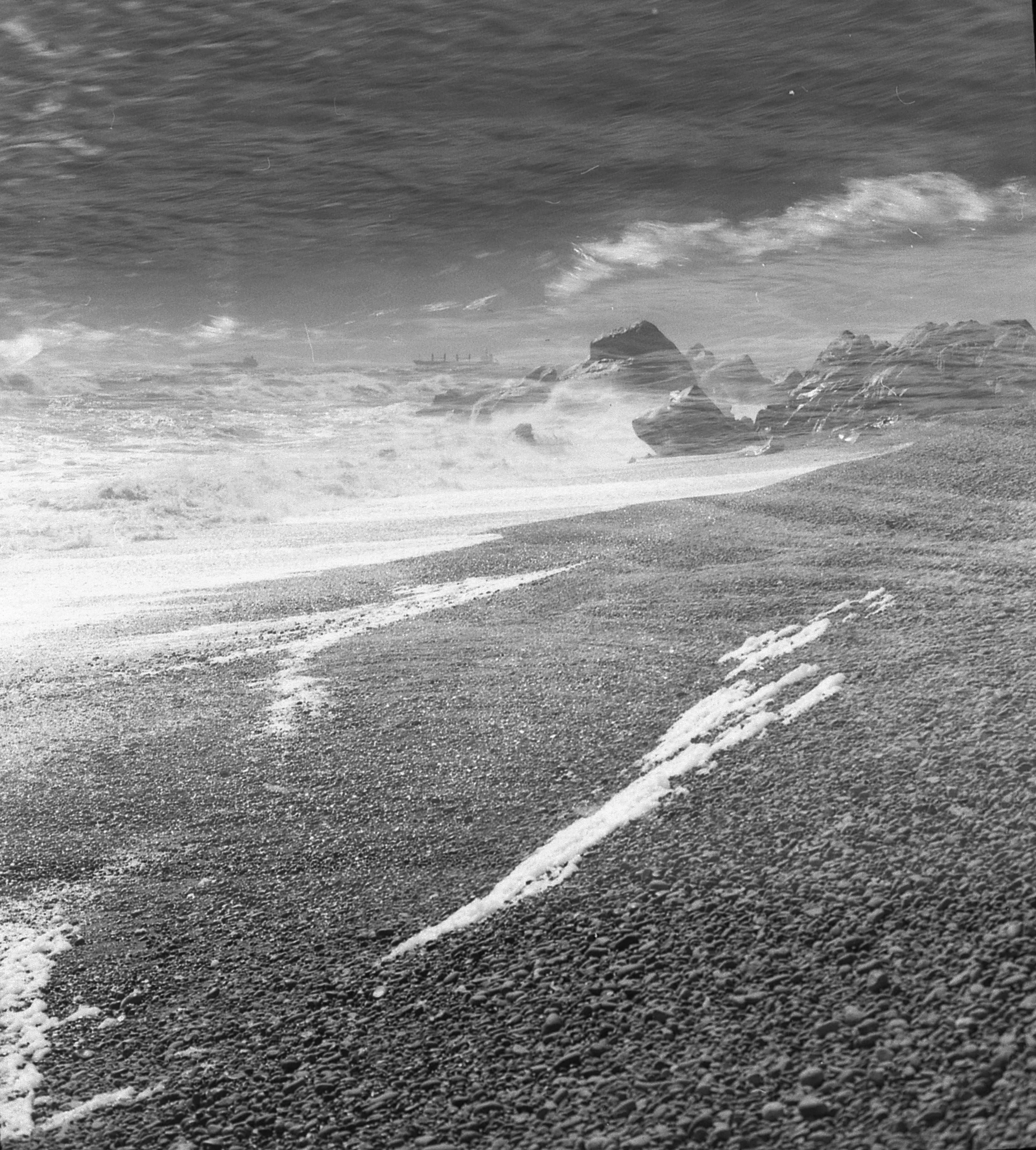
Scan of a final negative presented to Griffith, 4 of 4.
And the happy ending you’re looking for? We are still happily in love and together, all these years later.
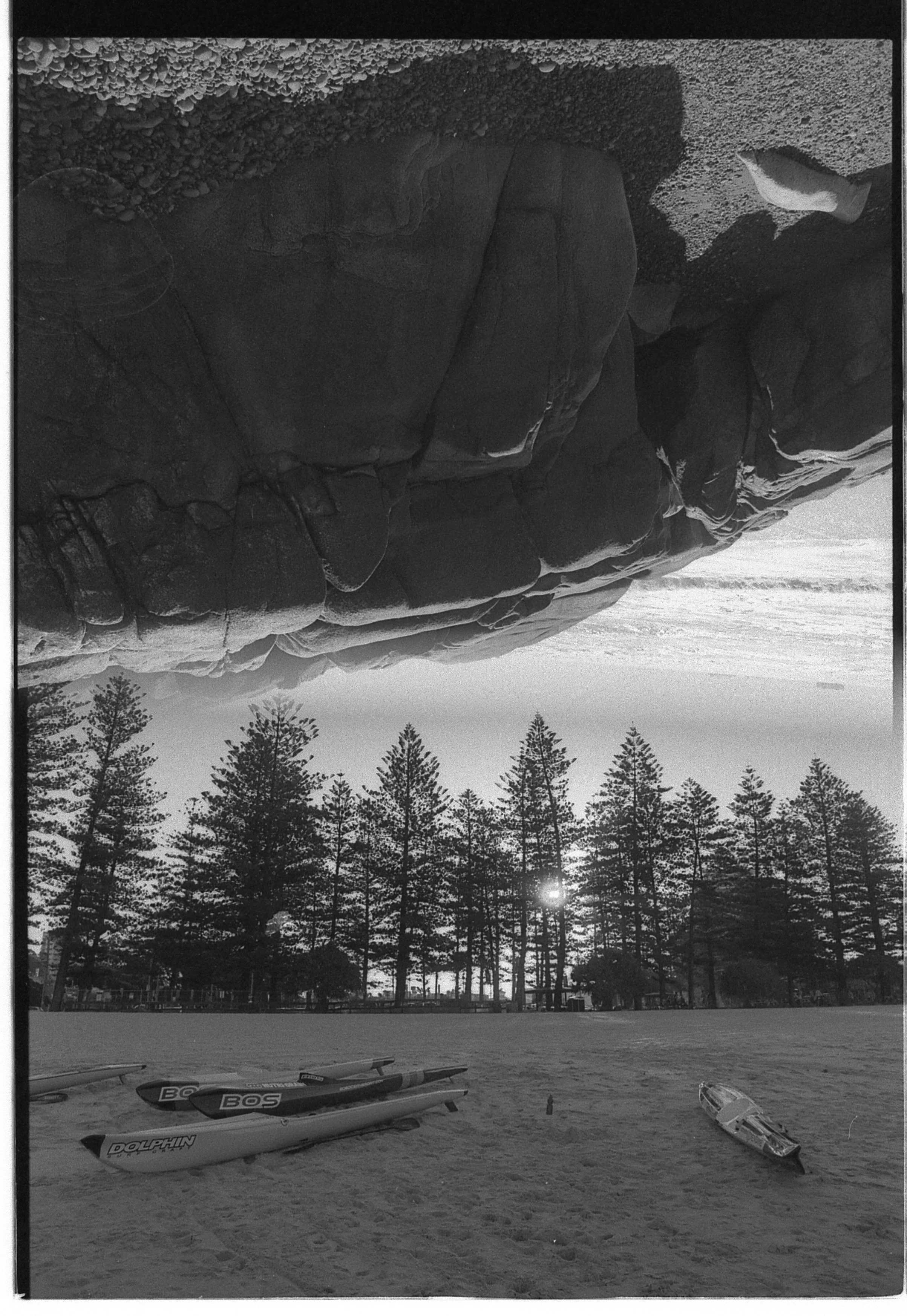
Negative scan, not presented to the university. Australia on the bottom half.
On a laptop here in Australia, I organised the purchase of a Nikon F03 online in Chile for Bruno, and separately a 50mm and 24mm fixed lens.
I couldn’t source the same camera for Bruno as I myself had, but critically it was old enough to lack an automatic film forwarder.
And it was imperative we shot at the same two focal lengths, or the risk of images not blending was too high.
Rolls had to be shot, packed and sent via Fedex, reshot in our respective countries, and sent back. After selecting the final ones, I would then laboriously print them out in the darkroom. I had two trimesters.
We would each shoot and send half-rolls to each other at the same time to maximise the rolls that would make it. Many of them arrived after the final deadline, and are still sitting in my drawer, undeveloped.
I needed to know what exact information and apertures to relay to Bruno or we’d be shooting blind.
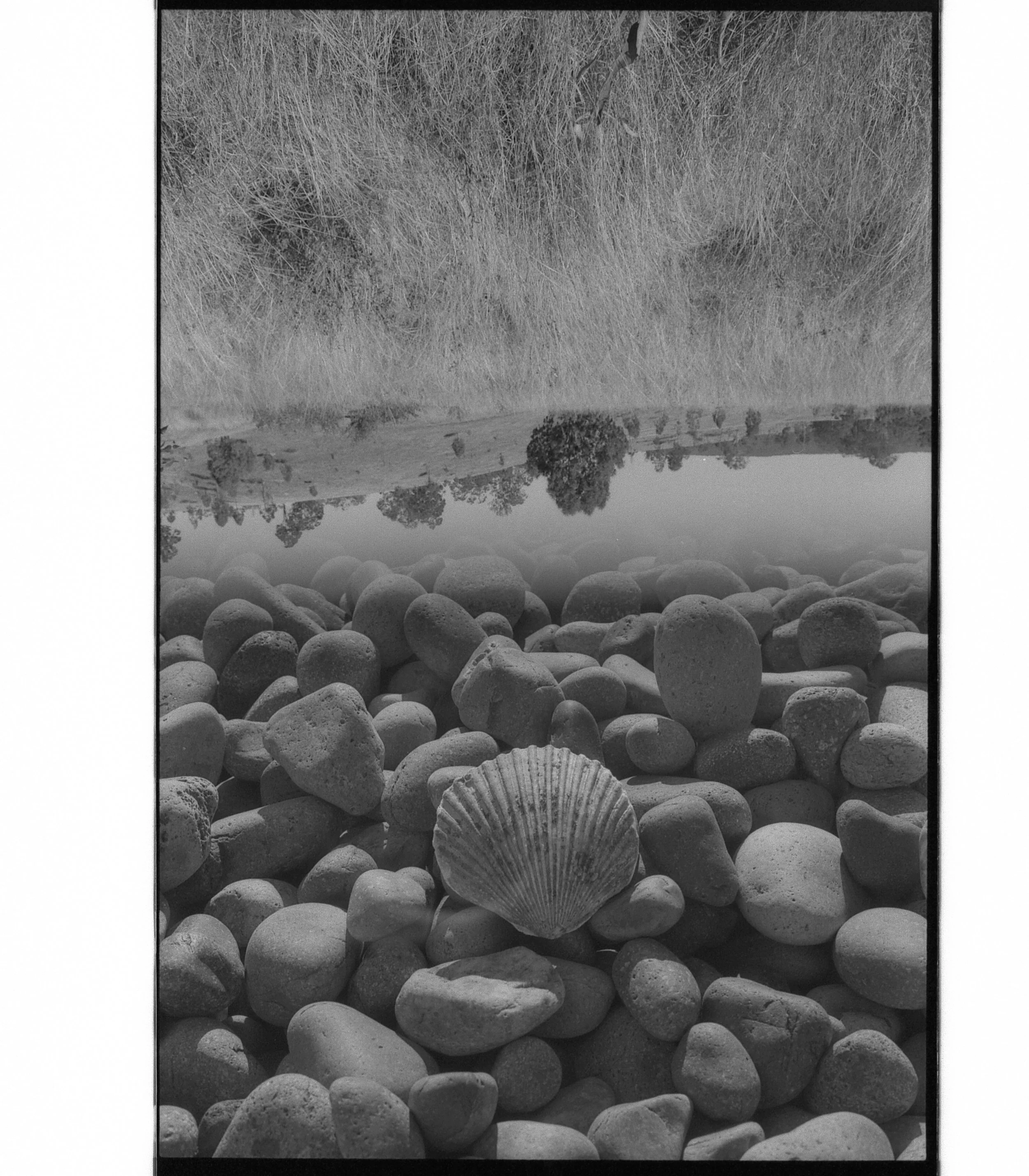
Scanned film negative, not presented to the university
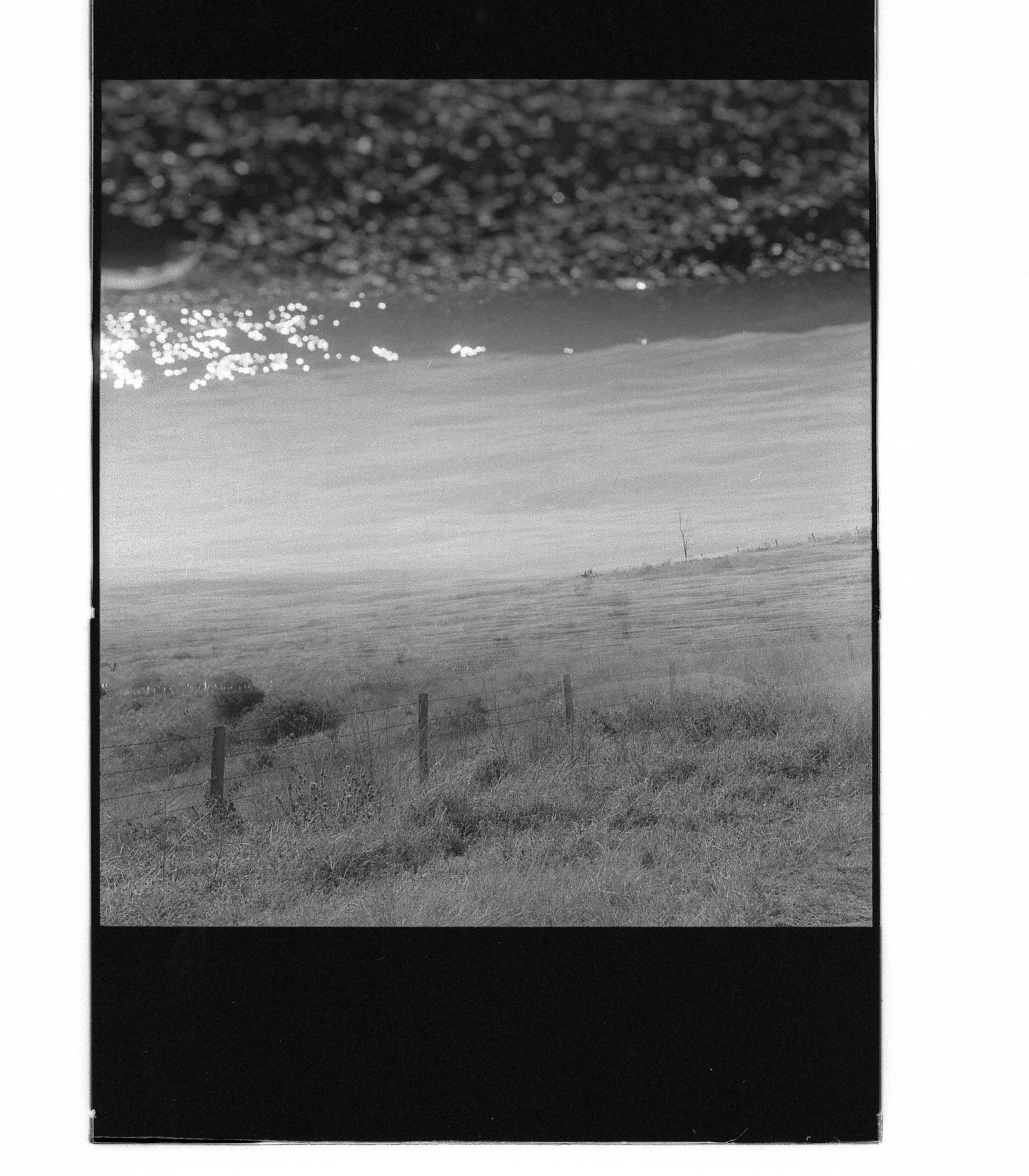
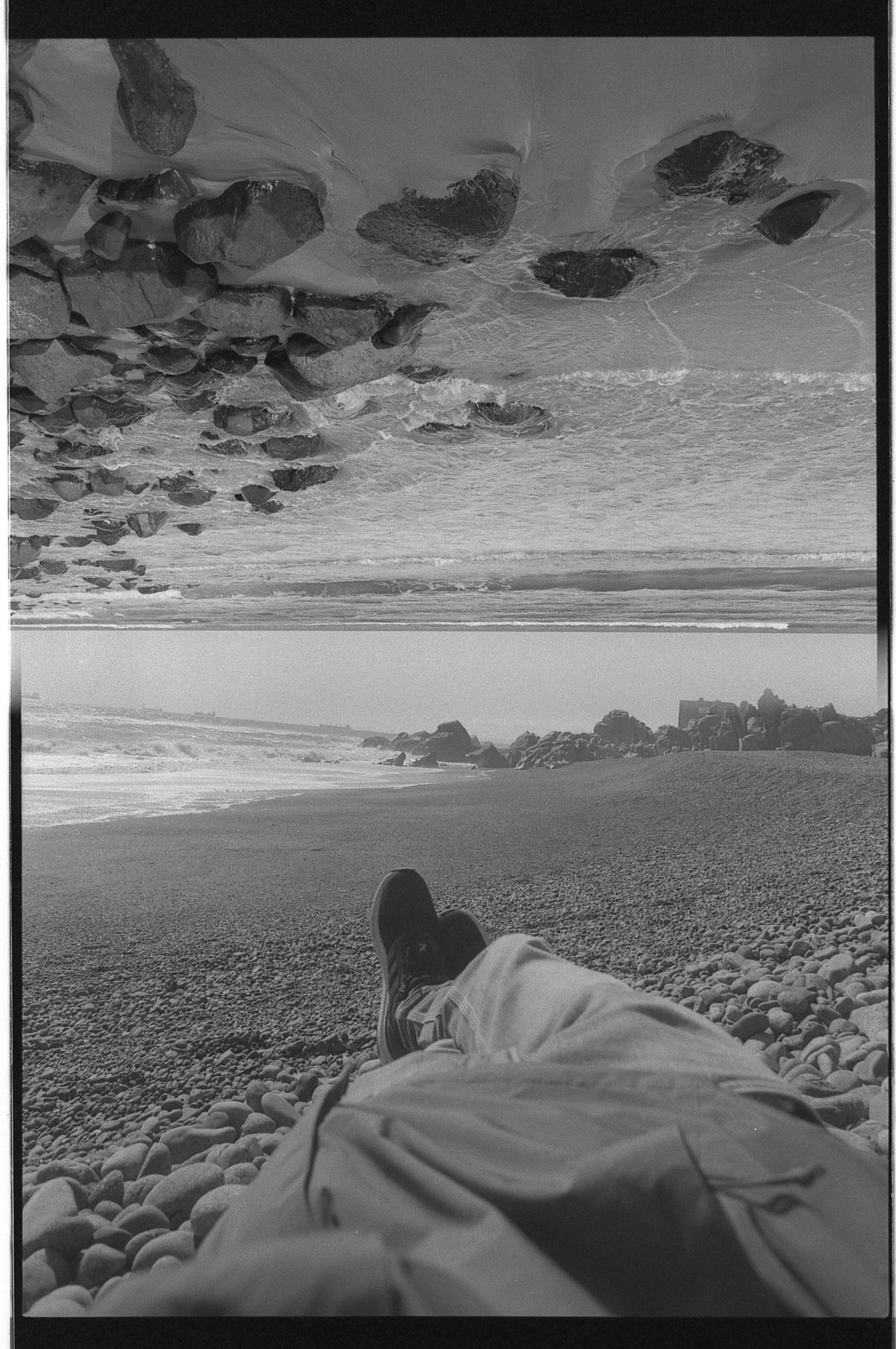
Negative scan, not presented to the university. Chile on the bottom half.
Now imagine doing half that process with one camera, carefully marking the start point on the film as best you could, rewinding it, and then sending it to the other side of the world so that the second half could be completed on another camera.
Amazing it worked at all.
“What’s the most important thing on your mind right now?”
That’s what we were asked to consider when thinking of our final university project. We had free rein to do what we wanted and in spite of my major in Creative Advertising, commercialism and brands weren’t on my mind.
Scan of a final negative presented to Griffith, 1 of 4. All presented images would be developed and printed in the darkroom for a final presentation. The rest live on as negatives.
What was on my mind was that normal life was no longer the norm, and seemingly overnight the world had lock-stepped into shutting down and the boy I had fallen in love with was stuck on the other side of it.
When would this be over and would things go back to normal if they did? Would international borders ever reopen? If I keep working this part-time retail job, will I bring a home a virus that kills my parents?
Dramatic, occasionally selfish questions in hindsight, but they were honest anxieties as I was living through them.
Scan of a final negative 2 of 4, displayed from each camera's perspective.
Bruno, who was still living in Chile, was supposed to return in 8 months to start university. The plan was to move in together.
He wouldn’t return for another 21 months, landing on the final day of December 2021.
My favorite image is the one above, which I’ve included early on here and presented both ways.
It’s beautiful, but it’s taken a long time to desensitise ourselves from its mental baggage. It hangs in our bedroom now.
Shot from the Sydney Opera House
So before I keep going, I do have to mention the origins of this idea, and the specific technique in use, this wonky ocean pole, and why it’s a little crazy that this idea even worked.
Sydney Opera House
The double exposure (which itself is an incredibly old) technique I’m using here is something I did not invent — I found it 4 years prior to the project on the website PetaPixel from photographer Vincent Moschetti.
I am almost certain I’m the only person that has done it to this scale, however.
Sydney Opera House
These images were created all the way back when I took an elective class in Sydney while finishing my degree in Music Composition.
Little did I know that I would incorporate this technique again four years later, spanning two continents, in a completely different degree.
Near the Sydney Opera House
You cover half the lens with electrical tape (I put it on a lens protector to easily rotate it), take the first exposure, then flip the camera upside down and cover the other half of the lens and take the second exposure. The film should not advance, as you want the two exposure to fit into one 35mm size.
(Moschetti’s idea used a plastic lens cap with the middle cut out, but breaking plastic seemed harder than cutting a piece of tape.)
Bruno signed his lens protector before sending it back with the final shipment of film rolls.
This becomes the same image converging onto itself in the middle, with the beautiful peculiarities of film seamlessly blending them together — most of the time. It’s a technique with a high degree of failure.
So why the wonky pole?
Because I was doing this handheld and it’s awkward to hold a chunky film camera that is upside down.
Negative scan, not presented to the university.
Now imagine doing half that process with one camera, carefully marking the start point on the film as best you could, rewinding it, and then sending it to the other side of the world so that the second half could be completed on another camera.
Amazing it worked at all.
Negative scan, not presented to the university.
On a laptop here in Australia, I organised the purchase of a Nikon F03 online in Chile for Bruno, and separately a 50mm and 24mm fixed lens.
I couldn’t source the same camera for Bruno as I myself had, but critically it was old enough to lack an automatic film forwarder.
And it was imperative we shot at the same two focal lengths, or the risk of images not blending was too high.
Developed roll of 36 exposures
Alignment issues, both on horizontal and vertical axis, were not uncommon.
And this was Bruno’s first time with an analogue camera, and the light meter built into the camera was basic, so mistakes like over-exposing an entire roll were not uncommon.
And yet, there in the upper right hand corner:
Scan of a final negative presented to the university, 3 of 4.
I’d learn to embrace the ‘mistakes’, too.
The damage you see on the image is from a drying hook.
Normally you try to hang film from the unexposed ends but I was so sure this roll was a dud that I simply didn’t bother trying to preserve the negatives.
I think it adds character to the image now.
Familiar sight?
You may have seen it on Bec and Alex’s wedding page.
I kept coming back to this spot, and this area. It represented what I felt was my little corner of home, because its location was secret to almost everyone I knew.
Negative scan, not presented to the university.
This secret spot was shown to me by photographer Josh Delgado during Bec and Alex’s wedding years and years before the project, and it’s become quite special to me.
It’s 1.5 hours away from home by car. I’ve taken my dad up here for a picnic on father’s day, and visitors when they come in from overseas. Nearly had my little sedan get trapped when the wheels rolled backwards into a ditch, until I remembered I drive a forward-wheel drive.
It’s just a public access road up a hill, surrounding by working farms, but the view is incredibly calming at any time of the year.
Negative scan, not presented to the university.
Bruno in contrast lives right by the ocean, so most of his images are exactly of that, and of the beaches in his area. Some will have been during a road trip to a nature reserve with a waterfall too.
I would travel to the ocean too, not yet knowing if the pictures I had taken in my secluded spot would work at all. Trying to heighten the chance of success, I thought our images might benefit from sharing a common theme.
Below you can see a lifeguard’s hut gently resting above our hilltop, and based on the field of view, we were both using our 50mm lenses.
Scan of a final negative presented to Griffith, 1 of 4.
But even before all of that, of the arranging of cameras and lenses in a different country, I had to conduct initial, time consuming tests.
In the past I would shoot and pray, but we didn’t have the luxury of time.
Negative scan, not presented to the university.
Rolls had to be shot, packed and sent via Fedex, reshot in our respective countries, and sent back. After selecting the final ones, I would then laboriously print them out in the darkroom. I had two trimesters.
We would each shoot and send half-rolls to each other at the same time to maximise the rolls that would make it. Many of them arrived after the final deadline, and are still sitting in my drawer, undeveloped.
I needed to know what exact information and apertures to relay to Bruno or we’d be shooting blind.
Explaining the above image —
using exact same piece of tape on both lenses, on the left we have the 50mm lens, shooting from wide open until f/11.
On the right, the 24mm lens, which begins a little darker at f/2, shot until f/11.
As you can see, they were both equal at about f/8, but the before then the tape seemed to have little effect on the 50mm lens.
Some apertures would produce hard lines, while others would allow us to blend our images more easily.
In the end, everything turned out exactly at it needed to.
There are dozens of things that could have gone wrong on this project (and some did, and it turned out great). The radiation alone from customs scanners should have been enough to fry our film.
But this art project became a project in logistics, and it had its intended effect — keeping our minds occupied while we were separated.
Scan of a final negative presented to Griffith, 4 of 4.
And the happy ending you’re looking for? We are still happily in love and together, all these years later.